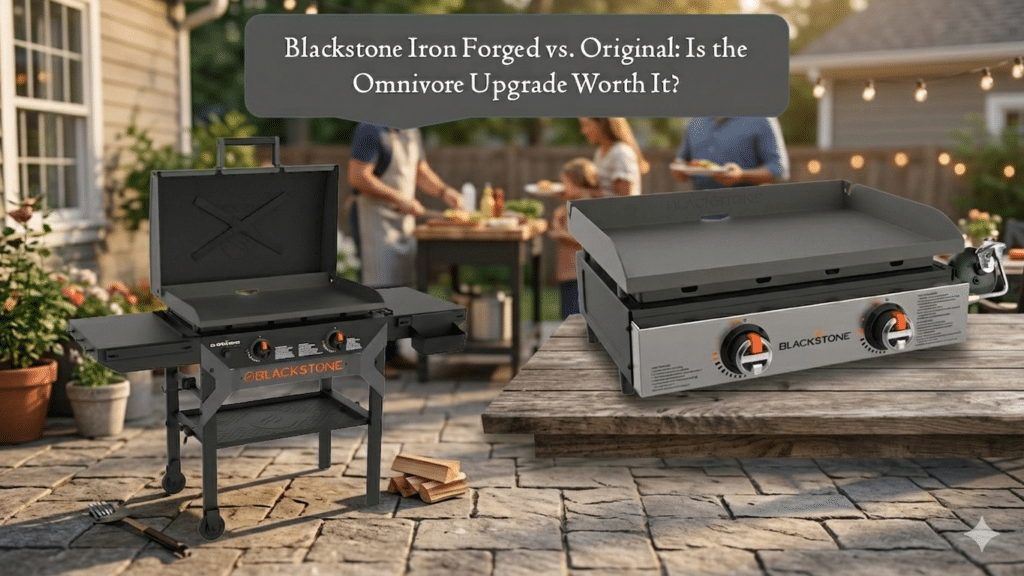
The evolution of the backyard griddle has moved fast, and nothing illustrates that trajectory quite like the jump from the classic black-and-orange foundations to the newer, more industrial aesthetics. I’ve spent the last month alternating between the Blackstone Iron Forged 28” and the Blackstone 1883 Original 28”, and it’s been a fascinating study in “vibe vs. velocity.” Both of these machines occupy the same 28-inch footprint – a size I personally consider the “sweet spot” for anyone feeding a family without wanting a grill that takes up half the patio – but they approach the art of outdoor cooking with very different engineering philosophies.
The Original series is the heritage play; it’s the design that put Blackstone on the map, refined over years to be the ultimate dependable workhorse. The Iron Forged series, however, feels like the “Pro” version that finally addressed every minor gripe long-term griddlers ever had. From the way the heat hits the steel to the stability of the hood, I’ve pushed both units through pancake marathons and high-heat smash burger sessions to see if the “Iron Forged” upgrades are actually worth the transition.
The Key Difference: Blackstone Iron Forged vs. Original Grill Griddle
While both units share a 524-square-inch cooking surface, the primary divide is found in the Plate Engineering and Hood Design.
- The Blackstone Iron Forged (The High-Efficiency Upgrade): This model features the Omnivore Griddle Plate. This isn’t just a marketing term; the plate is physically designed with built-in wind guards and a specific underside structure that prevents warping and captures heat more efficiently. It also features an X-Braced Hood, which feels significantly more rigid and premium when opening and closing compared to standard models.
- The Blackstone 1883 Original (The Classic Standard): This unit utilizes the traditional 34,000 BTU H-Style burner It relies on raw power to heat a heavy carbon steel plate. It includes the integrated protective hood and dual counter-height side shelves, offering a more traditional “prep-and-cook” station layout that many long-time griddlers are already comfortable with.
In short: You are choosing between the advanced thermal technology of the Iron Forged and the familiar, high-output power of the Original series.
Related Articles: Blackstone Tabletop vs. On The Go | Ninja IG601 Vs IG651 Indoor Grill
Comparison Table: Blackstone Iron Forged vs. Original 28” Griddle Grill
| Feature | Blackstone Iron Forged 28” | Blackstone 1883 Original 28” |
| Cooking Area | 524 Sq. Inches | 524 Sq. Inches |
| Griddle Plate | Omnivore Technology (Wind Guards) | Traditional Carbon Steel |
| Heat Output | Optimized BTU (High Efficiency) | 34,000 BTUs (Raw Power) |
| Hood Design | X-Braced Reinforced Hood | Integrated Protective Hood |
| Burner Style | Dual Independent Burners | Dual H-Style Burners |
| Side Shelves | Tool Holder Integrated | Counter-Height Side Shelves |
| Cleanup | Rear Grease Management | Rear Grease Management |
| Ignition | Electric Ignition | Electric Ignition |
| Maneuverability | Heavy Duty Casters/Wheels | Two Large Wheels |
| View Current Price On Amazon | View on Amazon | View on Amazon |
Detailed Comparative Review: First-Hand Impressions
Design: The “Built Like a Tank” Test
The first thing I noticed when assembling the Iron Forged was the “X-Braced” hood. On older or more basic models, the hoods can sometimes feel a bit “tinny” or prone to twisting if you grab them from the corner. The Iron Forged hood feels rock solid. It has a weight and a dampening effect that makes it feel like it belongs on a much more expensive outdoor kitchen unit. The tool holders are also a nice touch – they aren’t just hooks; they are positioned exactly where you’d naturally reach for a spatula.
The 1883 Original design is a classic for a reason. It’s wider at the base and feels very grounded. The “Counter-Height” side shelves are the standout here. At 6’1″, I often find myself hunching over grill shelves, but the 1883 shelves are positioned just high enough that I could prep my burger toppings comfortably without a backache. It’s a very ergonomic setup for the “prep-as-you-go” chef.

Blackstone 2311 Iron Forged 28” Omnivore Griddle with X-Braced Hood, Powder Coated Steel, Black
- Omnivore Griddle Plate Technology: The Omnivore griddle plate with built-in wind guards is designed and tested to recover faster, prevent warping, and use less fuel to maintain high heat
- Spacious Griddle Top: Easily cook for a crowd on this 28” griddle with 524 square inches of cooking space. Cook up to 21 burgers or 15 pancakes at a time

Blackstone 2203 22" Tabletop Griddle, Black
- Portable Design: This griddle was built for portability so you can bring it along on all of your outdoor adventures. Make burgers at the beach or cook a hearty breakfast while camping. Cook delicious meals no matter where your adventure takes you
- Griddle Top Versatility: The nature of a griddle top makes it possible to cook a wide variety of foods on this one cooking unit. Enjoy traditional barbecue or mix it up by making stir fry, breakfast, veggies, and more
Ease of Use: Ignition and Heat-Up
Both units use the electric ignition system, which has become standard for Blackstone. You push, you turn, and it clicks into life.
- The Iron Forged Experience: Because of the Omnivore plate, I found that this unit was ready to cook about 3 to 5 minutes faster than the Original. The built-in wind guards are the secret hero here. I live in a fairly windy area, and on the Iron Forged, the flame stayed blue and consistent. I didn’t have to “babysit” the temp knobs as much to compensate for gusts.
- The Original Experience: The 34,000 BTUs on the 1883 Original are nothing to sneeze at. It’s a “hot” grill. It uses a lot of fuel to get that plate saturated, but once it’s there, it stays there. The H-style burners provide a very even spread, but I did notice that on windy days, I had to turn the knobs up higher than I did on the Iron Forged to keep the same surface temperature.
Related Articles: Ninja FlexFlame vs Blackstone 1814 Griddle | Blackstone 1813 vs 1814 Griddle
Functions: The Omnivore Difference
This is where the rubber meets the road – or rather, where the meat meets the steel.
The Omnivore plate on the Iron Forged is a genuine game-changer for warping. I’ve seen many 28-inch griddles develop a slight “bow” over time after repeated high-heat sessions. The Iron Forged plate stayed perfectly flat, which is vital for things like eggs or making sure your oil doesn’t all run to one corner. The heat recovery is also noticeably better. When I dropped 15 frozen patties on it, the sizzling didn’t skip a beat.
The Original 1883 is a beast for volume. With two H-style burners, you have two very distinct heat zones. I could have a “searing” zone on the left and a “warming” zone on the right. While the Iron Forged also has dual controls, the Original’s traditional burners seem to allow for a slightly wider temperature gap between the two sides. If you’re the kind of cook who likes to char peppers on one side while slowly melting cheese on the other, the Original’s heat profile is very intuitive.
Maintenance: The Grease Management Ritual
Both grills utilize the patented rear grease management system. It’s the gold standard for a reason: you just scrape everything to the back and it’s gone.
The Iron Forged felt slightly easier to maintain because the powder-coated finish on the body seemed to resist grease stains a bit better. The Omnivore plate, despite its complex underside, was easy to scrape clean on the top surface.
The Original 1883, however, has those large counter-height shelves that tend to catch a lot of splatter. I found myself doing a bit more “chassis cleaning” on the Original than I did on the Iron Forged. That said, the large wheels on the Original made it much easier to wheel into my garage at the end of the night compared to the smaller casters found on many other models.
Blackstone Iron Forged 28” Grill Griddle
Blackstone 2311 Iron Forged 28” Omnivore Griddle with X-Braced Hood, Powder Coated Steel, Black
- Omnivore Griddle Plate Technology: The Omnivore griddle plate with built-in wind guards is designed and tested to recover faster, prevent warping, and use less fuel to maintain high heat
- Spacious Griddle Top: Easily cook for a crowd on this 28” griddle with 524 square inches of cooking space. Cook up to 21 burgers or 15 pancakes at a time
Pros:
- Omnivore Plate: Faster recovery, no warping, and massive fuel savings.
- Wind Resistance: Built-in guards mean you can cook in less-than-perfect weather.
- Reinforced Hood: The X-bracing makes it the sturdiest hood in the lineup.
- Tool Integration: Everything you need is within arm’s reach.
Cons:
- Complexity: More proprietary parts if you ever need a replacement plate.
- Footprint: It’s a bit deeper than the original, requiring a bit more patio clearance.
Blackstone 1883 Original 28” Griddle Grill
Blackstone 2203 22" Tabletop Griddle, Black
- Portable Design: This griddle was built for portability so you can bring it along on all of your outdoor adventures. Make burgers at the beach or cook a hearty breakfast while camping. Cook delicious meals no matter where your adventure takes you
- Griddle Top Versatility: The nature of a griddle top makes it possible to cook a wide variety of foods on this one cooking unit. Enjoy traditional barbecue or mix it up by making stir fry, breakfast, veggies, and more
Pros:
- Raw Power: 34,000 BTUs provides incredible heat for searing.
- Ergonomics: Counter-height shelves are a blessing for taller cooks.
- Simplicity: A proven design with a massive community of users for tips/tricks.
- Maneuverability: Large wheels handle bumps and cracks in the driveway easily.
Cons:
- Fuel Consumption: Uses more propane to maintain high heat compared to the Omnivore.
- Wind Sensitivity: Performance can dip on gusty days without aftermarket wind guards.
The Verdict: Which 28-Inch Griddle Wins?
After a month of back-to-back testing, the winner depends on your environment.
I recommend the Blackstone Iron Forged if: You live in a windy area or you’re someone who grills year-round. The Omnivore plate and the built-in wind guards solve the biggest headaches of outdoor griddling. It is the more “efficient” and modern machine, and the structural upgrades to the hood make it feel like a long-term investment.
I recommend the Blackstone 1883 Original if: You value prep space and ergonomic comfort. If you have a sheltered patio where wind isn’t an issue, the raw BTU output and the excellent counter-height shelves make for a very comfortable and powerful cooking experience. It’s the “classic” experience for a reason.
My Personal Choice: I’m going with the Blackstone Iron Forged. The fact that I don’t have to fight the wind to keep my griddle plate at 400 degrees is worth every penny. Plus, the rigidity of that X-braced hood just makes the whole experience feel more premium every time I lift it.
Frequently Asked Questions
Does the Omnivore plate really save propane?
Yes. Because it recovers heat faster and has integrated wind guards, you don’t have to keep the burners on “High” to maintain your temperature. In my experience, I got about 2-3 more cookouts per 20lb tank compared to the Original.
Can I use metal utensils on both?
Absolutely. Both utilize carbon steel plates. Metal spatulas and scrapers are actually encouraged, as they help maintain the flat, seasoned surface.
Is the “X-Braced” hood removable?
It is integrated, but it can be removed for deep cleaning if necessary. However, it’s designed to stay on to protect your seasoning from the elements.
Which one is easier to move?
The 1883 Original has larger wheels on one side, making it better for moving across grass or uneven pavement. The Iron Forged typically has four casters, which are great for “spinning” it into a tight corner on a flat concrete patio.
Do they come with a propane regulator?
Yes, both units come with a standard regulator and hose for a 20lb propane tank.