The traditional kitchen workflow has a major flaw: the “oven bottleneck.” We’ve all been there – trying to figure out how to roast a chicken at 425°F while simultaneously needing to bake a delicate tray of roasted vegetables at 350°F. For years, the only solution was to wait, or to serve one half of the meal lukewarm. When I first saw the Ninja Double Oven series, I felt like someone had finally listened to the frustrations of the home cook.
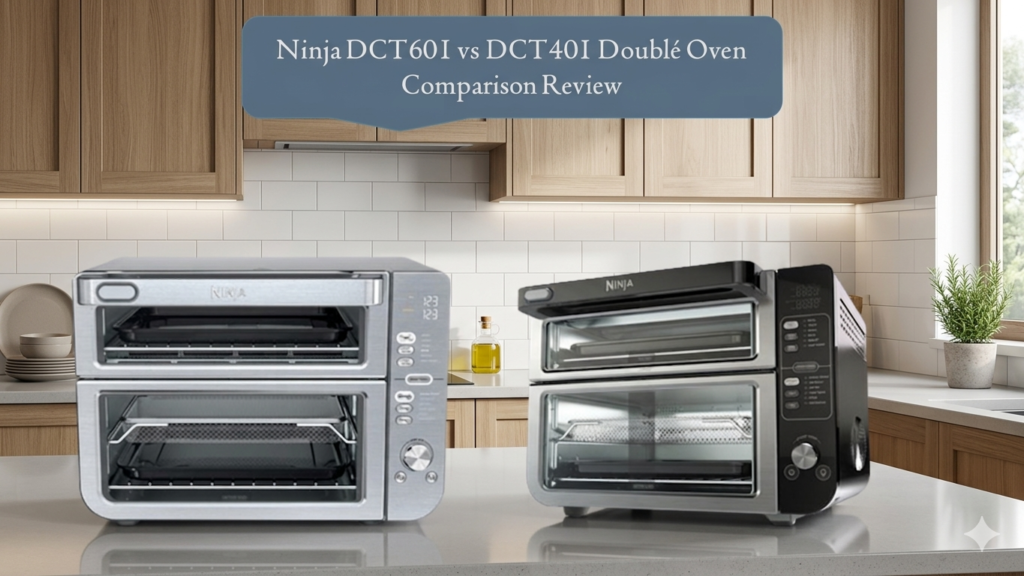
I’ve spent the last month living with both the Ninja DCT601 and the Ninja DCT401. These machines are designed around the revolutionary “FlexDoor,” which essentially splits a single countertop appliance into two independent ovens. On the surface, they look like twins. They share the same stainless steel aesthetic, the same 12-in-1 functionality, and the same footprint. However, after roasting countless family meals and air-frying enough wings to feed a stadium, I’ve realized that the differences – while subtle – change the user experience in meaningful ways.
Whether you are a busy parent trying to feed eight people in record time or a meal-prep enthusiast looking for the ultimate efficiency, choosing between these two depends on which specific features align with your cooking style. Here is my unfiltered, firsthand account of how these two Ninja titans performed in my kitchen.
The Key Difference: Ninja DCT601 vs. DCT401 Double Oven
The fundamental divide between the Ninja DCT601 and the DCT401 isn’t about what they can cook, but how they communicate with you and manage the internal environment.
- The Ninja DCT601 (The Refined Pro): This model is often marketed with an emphasis on DualZone Technology. While both units have two ovens, the DCT601 features a slightly more modernized control interface that prioritizes the “Double Stack XL” experience. It feels like the “Series 2” version of this concept, offering a highly responsive Auto Cook Menu and a digital display that feels a touch more intuitive when navigating the 12 different programs.
- The Ninja DCT401 (The Original Workhorse): This is the foundational model that proved a countertop double oven could actually replace a traditional range. It focuses heavily on the Rapid Top Convection, making it an absolute speed demon for toast, bagels, and quick snacks. It provides the exact same 12 functions but presents them in a layout that feels a bit more “classic Ninja.”
In short, the DCT601 is the “deluxe” iteration with a focus on a more automated, seamless menu experience, while the DCT401 is the proven powerhouse that delivers the same heavy-duty performance with a slightly more straightforward interface.
Comparison Table: Ninja DCT601 vs. DCT401 Double Oven
| Feature | Ninja DCT601 | Ninja DCT401 |
| Technology | Smart Finish & DualZone | Smart Finish & FlavorSeal |
| FlexDoor | Yes (Dual Access) | Yes (Dual Access) |
| Cooking Functions | 12-in-1 | 12-in-1 |
| Capacity | Fits 4.5 lb Chicken / 6 lbs Wings | Fits 12″ Pizza / 6 lbs Wings |
| Dimensions | 18.6″D x 16.39″W x 13.26″H | 18.6″D x 16.39″W x 13.26″H |
| Smart Finish | Syncs both ovens | Syncs both ovens |
| FlavorSeal | Yes (Anti-Odor Transfer) | Yes (Anti-Odor Transfer) |
| Programs | Auto Cook Menu / Digital | Standard Digital / Programmable |
| Included | 2 Sheets, 2 Racks, Basket, Crumb Tray | 2 Sheets, 2 Racks, Basket, Crumb Tray |
| Finish | Stainless Steel | Stainless Steel |
| View Current Price On Amazon | View on Amazon | View on Amazon |
Detailed Comparative Review: My Personal Observations
-
Design: The FlexDoor Magic
Walking into the kitchen and seeing a double oven sitting on the counter still feels like a luxury. Both the DCT601 and DCT401 occupy the same physical space. At 18.6 inches deep, they fit comfortably on a standard countertop without hanging over the edge. The “FlexDoor” is the star of the show here. There is a single handle with a trigger-like button; if you just pull it, the top half of the door opens. If you engage the trigger, the whole door swings down.
In my testing, the DCT601 felt just a hair more “solid” in the door mechanism. I love being able to peek at my toast in the top oven without letting the heat out of the bottom air-fryer. The stainless steel finish on both is high-quality, though I noticed the DCT601 seems to have a slightly updated protective coating that makes it a bit more resistant to the “cloudy” look that stainless can get after a week of heavy use.

- SMART FINISH with DualZone Technology: Sync both independent ovens to cook 2 meals, 2 different ways that finish at the...

- FLEXDOOR: Creates two separate ovens. Access just the top for quick meals and snacks, or open the full door so you can...
-
Ease of Use: Navigating the 12-in-1 Menus
- Operating the DCT401: This was my first introduction to the double-oven lifestyle. The controls are laid out clearly. You select the top or bottom oven, pick your function (like “Air Fry” for the bottom or “Toast” for the top), set your time, and hit start. The Smart Finish button is a lifesaver. I put a tray of salmon in the bottom and asparagus in the top; I hit Smart Finish, and the oven automatically delayed the asparagus so they both finished at the exact same second.
- Operating the DCT601: The experience here feels a bit more “guided.” The Auto Cook Menu logic is slightly more advanced. It feels like the machine is doing more of the heavy lifting when it comes to timing. I found the digital readout on the 601 to be a bit sharper and easier to read from across the kitchen. If you are someone who hates squinting at small text on appliances, the 601 gets the win for visibility.
-
Functions: Rapid Top vs. Air Fry Bottom
Both ovens use a “split” logic for their 12 functions. The Top Rapid Oven handles Bake, Broil, Reheat, Keep Warm, Bagel, and Toast. The Bottom Convection & Air Fry Oven handles Air Fry, Convection Bake, Pizza, Air Roast, Whole Roast, and Dehydrate.
- The Top Oven Performance: I used the top oven for my morning routine. Because the cavity is so small, it heats up in less than 90 seconds. Whether it was the DCT401 or the 601, the toast was perfectly even across all six slices.
- The Bottom Oven Performance: This is where the heavy lifting happens. I roasted a 4.5 lb chicken in the DCT601 using the “Whole Roast” setting. The convection fan is powerful – it creates a “vortex” effect that crisping the skin all the way around without needing a rotisserie. In the DCT401, I focused on the “Air Fry” mode for wings. Both machines produced 6 lbs of wings that were indistinguishable from deep-fried results. The FlavorSeal technology actually works; I baked a chocolate cake in the top while roasting garlic in the bottom, and the cake didn’t have even a hint of garlic aroma.
-
Maintenance: The Daily Clean
Maintenance is the part no one likes to talk about, but with two ovens, it’s a valid concern. Both models have a removable crumb tray at the very bottom, which catches the majority of the “toast fallout.”
In my experience, the DCT601 was slightly easier to wipe down inside. The interior coating felt a bit slicker, allowing grease from a “Whole Roast” session to be wiped away with a simple degreaser and a sponge. Both units come with dishwasher-safe sheet pans and racks. A pro-tip I discovered: because the air fry basket is large and fits in the bottom oven, I found it helpful to place one of the sheet pans on the rack below it to catch any drippings, preventing them from burning onto the bottom heating elements.
Ninja DCT601 (The Modern Upgrade) Double Oven
- SMART FINISH with DualZone Technology: Sync both independent ovens to cook 2 meals, 2 different ways that finish at the...
Pros:
- DualZone Intelligence: Better synchronization for complex multi-part meals.
- Updated Interface: Sharper digital display and more intuitive Auto Cook Menu.
- High Visibility: Easier to monitor settings from a distance.
- Build Quality: Feels like the most refined version of the double-oven series.
Cons:
- Price: Often carries a premium over the 400-series models.
- Learning Curve: The more automated menu might take a day or two to get used to.
Ninja DCT401 (The Proven Original) Double Oven
- FLEXDOOR: Creates two separate ovens. Access just the top for quick meals and snacks, or open the full door so you can...
Pros:
- Exceptional Speed: The Rapid Top Convection is incredibly efficient for daily snacks.
- Tried and True: A massive user base and a history of reliable performance.
- Value: Often the better deal for those who want the double-oven functionality without the “deluxe” price tag.
- Straightforward Controls: Very little learning curve for long-time Ninja users.
Cons:
- Interface: The display feels a bit “older” compared to the 601.
- Maintenance: The interior requires a bit more elbow grease to keep pristine.
The Verdict: Which Double Oven Belongs in Your Kitchen?
After weeks of back-to-back testing, the conclusion is clear: you can’t really go wrong with either, but there is a “best” fit for different types of cooks.
I recommend the Ninja DCT601 if: You want the most modern, streamlined experience possible. If you frequently cook complex meals that require the “Smart Finish” technology and you appreciate a high-visibility, automated interface, the 601 is the peak of this series. It feels like a more “premium” addition to a high-end kitchen.
I recommend the Ninja DCT401 if: You are looking for the best possible value for a double oven. If you don’t care about having the latest “Auto Cook” logic and just want a machine that can bake, air fry, and toast two things at once, the 401 is a workhorse that won’t let you down. It provides the exact same capacity and cooking power for a more digestible price.
My Personal Choice: I am sticking with the Ninja DCT601. The slightly better display and the way the menu logic handles the “Smart Finish” sync felt just a bit more polished during my hectic weeknight dinner rushes.
Frequently Asked Questions
-
Does the top oven also Air Fry?
No. The Air Fry function is exclusive to the bottom oven because it requires a more powerful convection fan and heating element configuration. The top oven is designed for “Rapid” tasks like baking, toasting, and broiling.
-
Can I fit a whole turkey in these?
A full-sized Thanksgiving turkey will not fit. However, you can easily fit a 12 lb turkey breast or a 4.5 lb whole chicken. These ovens are designed to replace your big oven for 90% of your daily meals, but not for a 20 lb holiday bird.
-
Is the “FlavorSeal” really effective?
Yes. It was the feature I was most skeptical about, but after roasting fish in the bottom and heating up a croissant in the top, I can confirm that the smell does not transfer. The two cavities are effectively sealed from one another.
-
How loud are these double ovens?
When the bottom convection fan is running (especially in Air Fry or Air Roast mode), you will hear it. It sounds like a standard high-end convection oven. The top oven is virtually silent when toasting or baking.
-
Do they get hot on the outside?
The exterior does get warm, especially during a long “Whole Roast” cycle. I recommend keeping at least 2-3 inches of clearance around the sides and top to allow for proper heat dissipation.