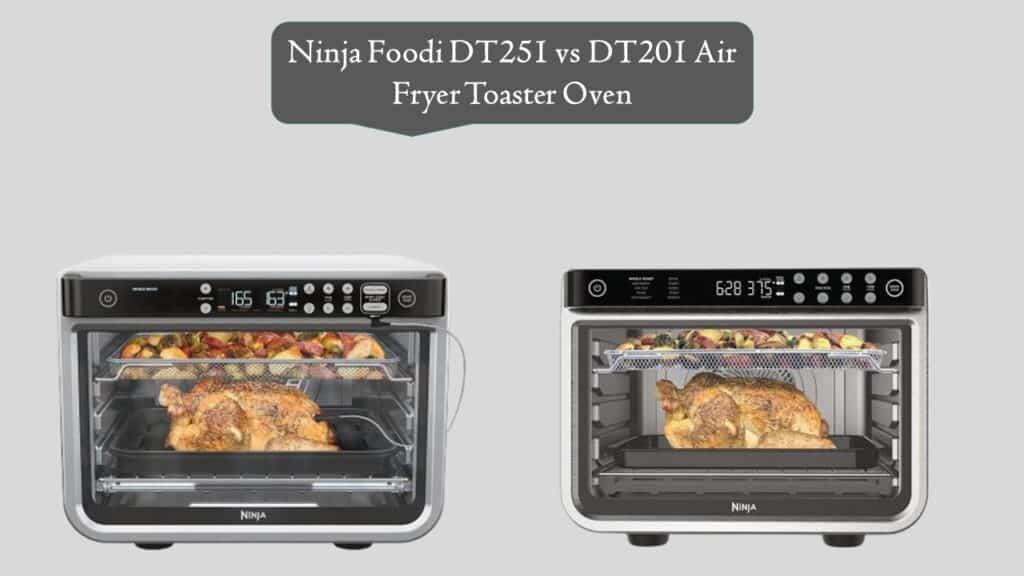
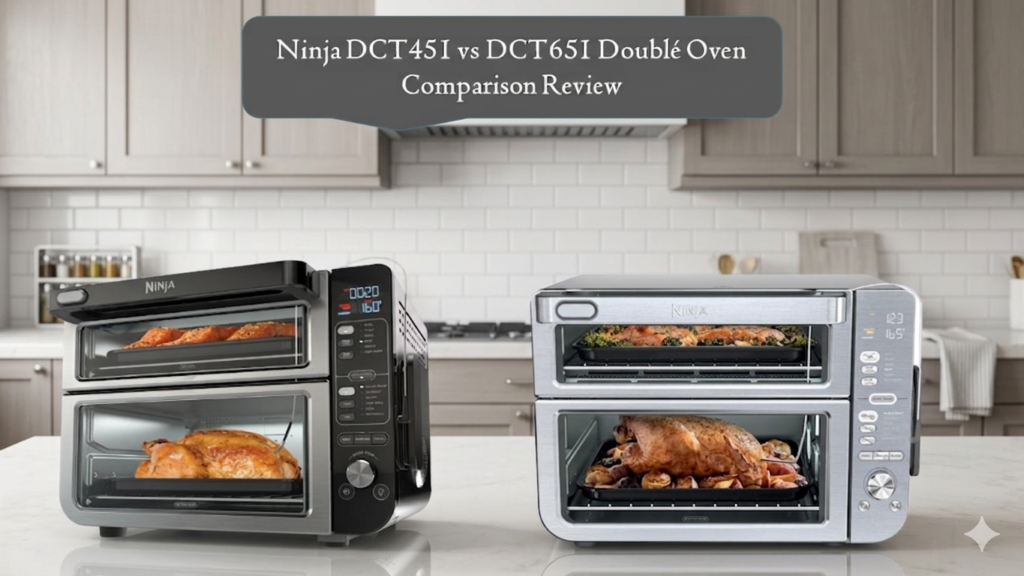
The dinner rush is usually a logistical nightmare of “back-to-back” cooking. You want roasted salmon, but the kids want a crispy pizza, and your traditional oven can only handle one temperature at a time. I spent years playing the waiting game – keeping one dish warm under foil while the other finished – until I brought the Ninja Foodi Double Oven series into my kitchen. Specifically, I’ve been putting the Ninja DCT451 and the Ninja DCT651 through a gauntlet of family dinners to see if two ovens are truly better than one.
These machines are built around the “FlexDoor” concept, a brilliant bit of engineering that splits a single countertop footprint into two independent cooking zones. While they look nearly identical sitting on a counter, the differences lie in the nuance of their “Smart” systems and their physical depth. One feels like a streamlined powerhouse for the daily grind, while the other leans into “Pro Cook” territory with more advanced temperature intelligence.
After roasting a dozen chickens and air-frying more wings than I care to admit, I’ve pinpointed exactly where these models diverge. If you are tired of your oven being the bottleneck in your meal prep, here is my hands-on take on which of these Ninja titans deserves your kitchen real estate.
The Key Difference: Ninja DCT451 vs DCT651 Double Ovens
The fundamental divide between the Ninja DCT451 and the DCT651 comes down to Temperature Automation and Physical Dimensions.
- The Ninja DCT451 (The Smart Standard) is slightly deeper (21.5″) and features the “Smart Cook System.” It includes a leave-in thermometer that monitors your meat’s internal temperature, but it operates with a more manual approach to setting your target doneness. It is a robust, high-capacity machine that focuses on “Smart Finish” technology to ensure two different meals end at the same time.
- The Ninja DCT651 (The Pro Tech) is surprisingly more shallow (18.6″ depth) but upgrades the brain of the machine to the Pro Cook System with Auto Temp Detect. This version isn’t just monitoring the temperature; it allows you to select a specific doneness level (Rare to Well Done) at the touch of a button. It automates the “guesswork” more effectively than the 450-series, making it a better fit for those who want foolproof results with zero effort.
In short, the DCT451 is the deeper, standard-smart choice for high-volume cooking, while the DCT651 is the more tech-forward, streamlined model for precision-seekers.
Comparison Table: Ninja DCT451 vs. DCT651
| Feature | Ninja DCT451 | Ninja DCT651 |
| Technology | Smart Cook System | Pro Cook System (Auto Temp) |
| Thermometer | Included (Leave-in) | Included (Pro-Grade) |
| FlexDoor | Yes (Dual Oven Access) | Yes (Dual Oven Access) |
| Cooking Functions | 12-in-1 Programs | 12-in-1 Programs |
| Product Depth | 21.5 Inches | 18.6 Inches |
| Smart Finish | Yes (Syncs Finish Times) | Yes (Syncs Finish Times) |
| FlavorSeal | Yes (No Scent Transfer) | Yes (No Scent Transfer) |
| Capacity | 6 lbs Wings / 12″ Pizza | 6 lbs Wings / 4.5 lb Chicken |
| Exterior | Stainless Steel | Stainless Steel |
| View Current Price On Amazon | View on Amazon | View on Amazon |
Detailed Comparative Review: My Kitchen Observations
-
Design: The FlexDoor Revolution
The first time I pulled the handle on the Ninja DCT451, I was genuinely impressed by the “FlexDoor” mechanism. It’s intuitive: a single button on the handle lets you open just the top oven (perfect for toasting bagels or reheating a slice of pizza) or the full door to access both. It feels sturdy, like a premium appliance rather than a flimsy toaster oven. However, the 21.5-inch depth of the DCT451 is significant. It sat right up against the edge of my standard counter, so you’ll want to measure your space carefully.
The Ninja DCT651 manages to feel a bit more “built-in.” By shaving nearly three inches off the depth, it sat much more comfortably back against my backsplash. Despite being more shallow, it didn’t feel cramped inside. The control panel is where the DCT651 really shines. It has a more sophisticated digital interface that makes selecting “Rare” or “Medium-Well” for a steak feel like using a piece of 2026 tech. Both units share that beautiful stainless steel finish that looks professional, though they do both love to collect fingerprints.

- FLEXDOOR: Creates two separate ovens. Access just the top for quick meals and snacks, or open the full door so you can...

- SMART FINISH with DualZone Technology: Sync both independent ovens to cook 2 meals, 2 different ways that finish at the...
-
Ease of Use: Manual Smart vs. Fully Automated
- Operating the DCT451: I used the Smart Cook System to roast a 5 lb chicken. You plug the thermometer into the side of the oven, stick it in the bird, and set your target temp. It works flawlessly, but you have to know what temperature you’re aiming for (e.g., 165°F). The “Smart Finish” button is the hero here. I put the chicken in the bottom and fries in the top; the oven waited to start the fries so that both were piping hot at the exact same second.
- Operating the DCT651: This model takes the “I don’t want to think” approach. The Pro Cook System has “Auto Temp Detect Intelligence.” When I made a beef roast, I didn’t have to look up the internal temp for medium-rare. I just selected the protein type and the doneness level on the screen. The oven did the rest. It feels a bit more refined and less like a “tool” and more like a “chef’s assistant.”
-
Functions: The Top Rapid vs. The Bottom Convection
Both ovens split their 12 functions between the two cavities, and the logic is sound.
- The Top Oven (Rapid Oven): I used this primarily for quick-hit items. It’s perfect for Toast, Bagels, and Reheating. Because the space is smaller, it heats up in about 60 seconds. My morning bagel was perfectly toasted without having to fire up a massive oven cavity.
- The Bottom Oven (Convection & Air Fry): This is the workhorse. This is where the Air Fry, Air Roast, and Whole Roast In my testing, the bottom oven of the DCT651 felt slightly more efficient with heat distribution, likely due to the “DualZone” technology being tuned for the more compact depth. I achieved a “shatter-crisp” skin on wings in about 22 minutes without having to flip them once.
-
Maintenance: The “Wipe-Clean” Reality
Cleanup on a double oven sounds twice as hard, but Ninja was smart with the interior coatings.
The DCT451 features a “Wipe Clean Exterior” that actually works. Most stainless steel appliances require a specialized spray, but a damp microfiber cloth removed most of the grease splashes. The crumb trays on both units are removable from the front, which is a life-saver.
The DCT651, being slightly more compact, was actually a bit easier to deep clean. I could reach the back corners of the interior more easily without overextending. The wire racks and sheet pans for both models are high-quality, though I always recommend hand-washing the air fry basket to keep the non-stick coating in pristine condition for the long haul.
Ninja DCT451 (The Deep Workhorse) Double Oven
- FLEXDOOR: Creates two separate ovens. Access just the top for quick meals and snacks, or open the full door so you can...
Pros:
- Deeper Capacity: Better suited for very large, long sheet pans.
- Smart Cook System: Reliable thermometer-based cooking for consistent results.
- FlavorSeal: Truly works – I baked cookies in the top while roasting garlic in the bottom, and the cookies didn’t taste like garlic.
- Price Point: Usually slightly more accessible than the 600-series.
Cons:
- Footprint: At 21.5 inches deep, it’s a big machine for small counters.
- Manual Intelligence: You still have to know your target temperatures for different meats.
Ninja DCT651 (The Precision Professional) Double Oven
- SMART FINISH with DualZone Technology: Sync both independent ovens to cook 2 meals, 2 different ways that finish at the...
Pros:
- Pro Cook Intelligence: Selectable doneness levels (Rare, Medium, etc.) make it foolproof.
- Compact Depth: Fits more comfortably on standard countertops without overhang.
- Auto Temp Detect: High-level sensor technology for more accurate roasting.
- Smart Finish: Seamlessly syncs two completely different cooking methods.
Cons:
- Price: The upgraded intelligence comes with a “Pro” price tag.
- Shallow Depth: While more space-efficient, you lose a bit of that deep-dish room.
The Verdict: Which Ninja Double Oven Wins?
After weeks of double-oven living, my conclusion is that these two machines serve two slightly different types of “busy.”
I recommend the Ninja DCT451 if: You have a large kitchen with deep counters and you cook for a big crowd (6–8 people) regularly. If you are comfortable knowing your meat temperatures and want the maximum possible internal volume for your money, the 451 is a dependable, high-capacity beast that will eliminate back-to-back cooking forever.
I recommend the Ninja DCT651 if: You value tech-driven precision and have a standard-depth counter. The “Pro Cook” system is a genuine luxury – being able to press “Medium-Rare” and walk away is a level of convenience that justifies the extra cost. It is the more refined, “smarter” version of the double oven concept.
My Personal Choice: I am sticking with the Ninja DCT651. The Pro Cook System’s ability to detect and automate doneness levels is a game-changer for weeknight steak or chicken dinners. Plus, the more shallow depth makes my kitchen look significantly less cluttered.
Frequently Asked Questions
-
Can I use the top and bottom ovens at different temperatures?
Yes! That is the entire point of the FlexDoor and FlavorSeal technology. You can air fry at 400°F in the bottom while toasting a bagel in the top. The temperatures are completely independent.
-
Does the “FlavorSeal” really stop smells from mixing?
Surprisingly, yes. Because each oven has its own independent heating and fan system, the air doesn’t circulate between the two. I’ve tested this with fish in the bottom and a cake in the top – the cake came out smelling like vanilla, not salmon.
-
How many slices of bread can it toast at once?
Both models can handle up to 6 slices of bread in the top oven simultaneously. This makes it a great replacement for a standard toaster.
-
Do I need to preheat these ovens?
The top oven heats up almost instantly (within 60-90 seconds). The bottom oven is much faster than a traditional range but still benefits from a 3-5 minute preheat if you are doing something precise like baking a cake or a pizza.
-
Is it hard to clean the “FlexDoor”?
Not particularly. The glass is high-quality, but grease can occasionally get into the seal area. A quick wipe with a degreaser after a heavy roast keeps it looking new. The removable crumb tray handles the majority of the mess.