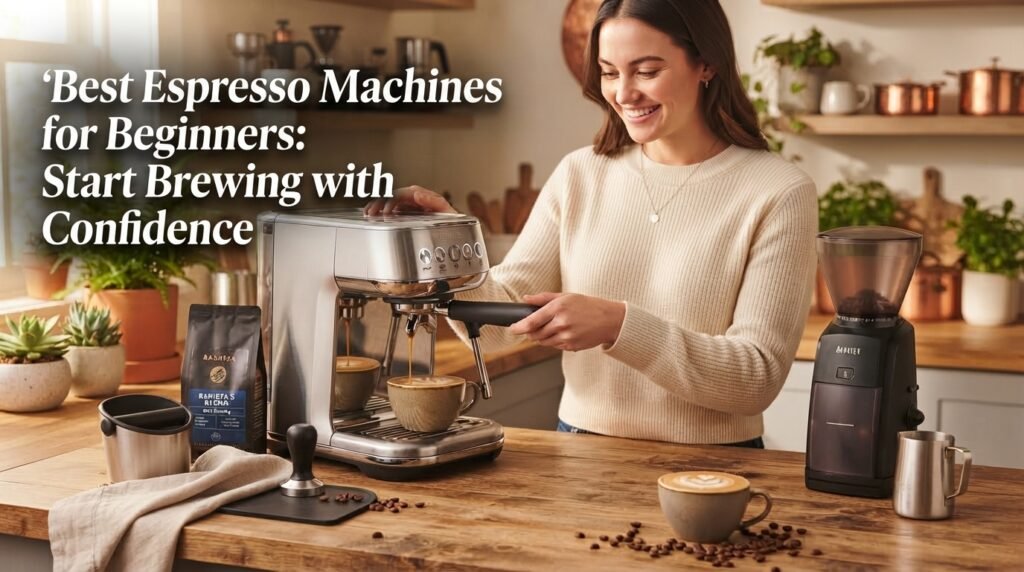
Entering the world of home espresso can feel overwhelming with all the technical jargon surrounding extraction pressure, grind sizes, and thermal stability. Fortunately, 2026’s top entry-level lineup offers something for every skill level and budget—from ultra-accessible budget units to feature-rich semi-automatics and zero-fuss “swipe-to-brew” machines.
Choosing the right starter machine comes down to how much control you want over the brewing process versus how much speed and simplicity you need during busy mornings. Below is an overview comparing key specs, followed by detailed individual reviews, a buyer’s guide, and answers to common starter questions.
Best Espresso Machines For Beginners in 2026
| Model | Machine Type | Heating & Pressure System | Portafilter / Interface | Water Capacity | Key Standout Feature |
|---|---|---|---|---|---|
| 1. De'Longhi Stilosa | Compact Manual | Stainless Steel Boiler | Ergonomic / Dial Interface | 1.0 L (33.8 oz) | Ultra-compact budget entry with two-level cup height |
| 2. Calphalon Temp iQ | Full-Sized Semi-Auto | Thermoblock + PID / 15-Bar | 58mm Commercial Style | 2.0 L (67.6 oz) | Full 58mm portafilter for even extraction |
| 3. Gaggia Classic Evo Pro | Prosumer Semi-Auto | Brass Boiler / 9-Bar OPV | 58mm Commercial Style | 2.1 L (71.0 oz) | Made in Italy, brass group head, 3-way solenoid valve |
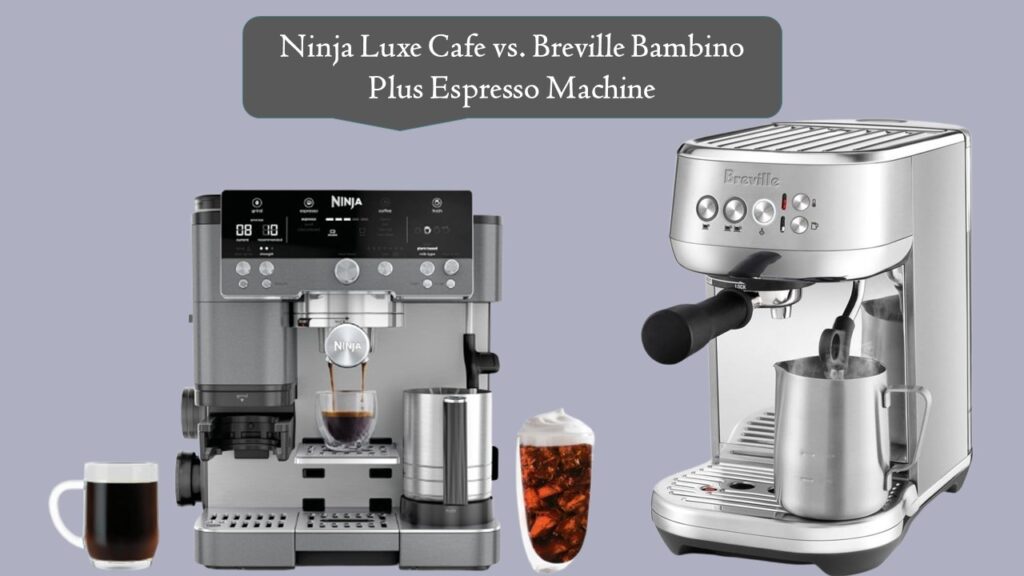
| 4. Breville Bambino Plus | Precision Semi-Auto | ThermoJet (3-sec heat) / PID | 54mm (19g dose) | 1.9 L (64.0 oz) | Auto-purging, automatic microfoam, 3-second startup |
| 5. Philips Baristina | Swipe-to-Brew Compact | Integrated Auto-Grinder / 16-Bar | Automated Handle | 1.2 L (40.5 oz) | One-swipe grind, tamp, and extraction in under 60s |
De’Longhi Stilosa Compact Manual Espresso Machine
Design & Build Quality
The De’Longhi Stilosa is engineered specifically for tight spaces and limited budgets. Featuring a modern black and stainless steel housing, its footprint measures just 8.07″ D x 13.5″ W x 11.22″ H, making it one of the most space-efficient manual machines available. A durable stainless steel boiler forms the core of its thermal heating system.
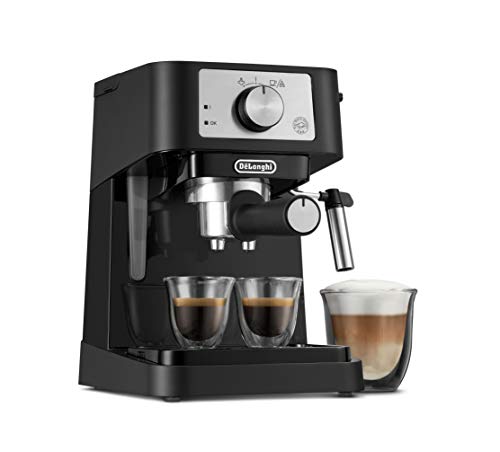
De'Longhi Stilosa Compact Manual Espresso Machine, Manual Milk Frother | #1 Worldwide Espresso Machine Maker, 15 Bar Pump Pressure, Stainless…
- Please refer to user guide or user manual or user guide (provided below in PDF) before first use
- Includes Portafilter, measuring scoop/tamper and two filters for single or double espresso
Performance & Capabilities
Equipped with an ergonomic portafilter and filter baskets for single or double espresso shots, the Stilosa allows beginners to practice fundamental espresso pulling. The manual steam wand provides texturing capability for lattes, cappuccinos, and flat whites. A removable two-level cup holder accommodates taller travel mugs alongside standard espresso demitasses.
Ease of Use & Cleaning
Operation is straightforward via a front-facing control dial. The removable 1.0-liter water tank and external drip tray make daily rinsing and refilling quick and hassle-free for first-time owners.
- Pros:
- Highly budget-friendly entry point for espresso beginners.
- Very small countertop footprint with clean aesthetics.
- Adjusts easily for taller cups via the two-level tray.
- Cons:
- Small 1.0L water reservoir requires frequent topping off.
- Lightweight chassis requires holding the unit steady when locking in the portafilter.
Calphalon Temp iQ Espresso Machine with Steam Wand
Design & Build Quality
Constructed with a brushed stainless steel exterior, the Calphalon Temp iQ offers the look and feel of a commercial setup. Its standout physical feature is a café-sized 58mm portafilter, which provides a wider surface area for ground coffee compared to typical consumer machines.
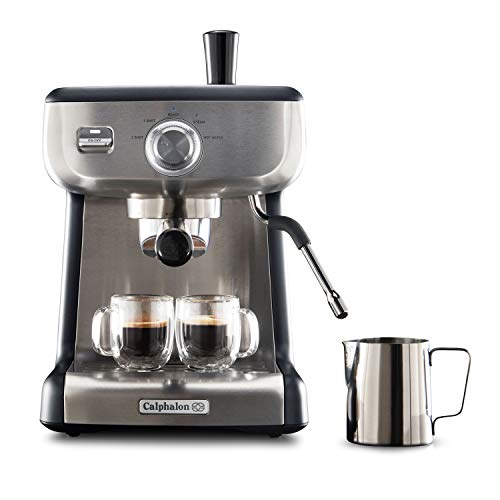
Calphalon BVCLECMP1 Temp iQ Espresso Machine with Steam Wand, Stainless
- 15-Bar Italian Pump: Delivers required pressure for maximum flavor extraction
- Dial Interface: For selecting steam, hot water, and programmed shots
Performance & Capabilities
Under the hood, a 15-bar Italian pump works alongside a Thermoblock heating system managed by PID temperature control. This combination maintains consistent thermal stability during brewing while ensuring broad water dispersion through the 58mm basket. It includes a commercial-style steam wand for frothing milk, a top-mounted cup warming tray, and a generous 2.0-liter water reservoir.
Ease of Use & Cleaning
An intuitive rotary dial interface clearly separates shot selection (single/double), steam, and hot water functions. Included accessories like the stainless steel milk jug, tamper, cleaning disc, and cleaning pin give novices all the basic maintenance tools right out of the box.
- Pros:
- Commercial 58mm portafilter allows use of standard barista accessories.
- PID temperature regulation and Thermoblock heating prevent sour extractions.
- Large 2.0-liter hinged water reservoir reduces fill cycles.
- Cons:
- Wider unit dimensions demand more counter width.
- Steam wand takes a moment to reach full steam pressure.
Gaggia Classic Evo Pro (Classic Blue – RI9380/50)
Design & Build Quality
Handcrafted in Italy, the Gaggia Classic Evo Pro is built with a solid steel housing, a brass group head with a stainless steel surround, and a commercial 58mm portafilter. The E24 generation introduces an upgraded brass boiler for improved heating capacity and power, finished in a classic blue tone.
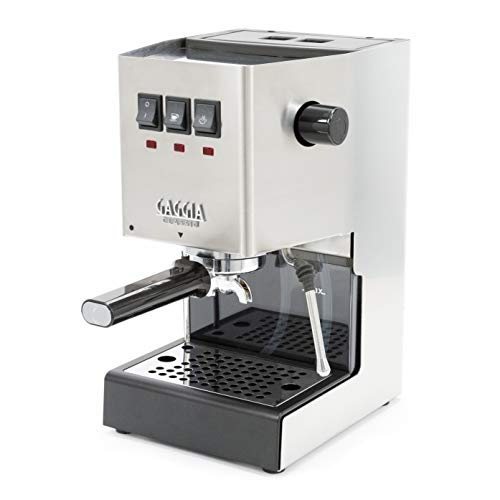
Gaggia RI9380/46 E24 Espresso Machine, Brushed Stainless Steel
- Solid Steel Housing, Made in Italy
- 9 Bar Espresso Extractions
Performance & Capabilities
Extracting at an authentic 9 bars of pressure, the Classic Evo Pro uses a commercial 3-way solenoid valve that instantly releases pressure post-brew, leaving behind a dry, easily disposable puck. Its commercial single-hole steam wand delivers dry steam for microfoam milk texturing. It ships with pressurized baskets for pre-ground coffee or ESE pods, as well as commercial single and double baskets for fresh whole beans.
Ease of Use & Cleaning
Heavy-duty rocker switches handle power, brew, and steam controls with direct tactile feedback. Maintenance is straightforward thanks to its 2.1-liter water tank and classic three-way valve system, though beginners must manage brew temperature manually between shot pulling and steaming.
- Pros:
- Made-in-Italy construction with commercial-grade brass and steel components.
- True 9-bar extraction pressure and 3-way solenoid pressure relief.
- Excellent longevity and part availability for enthusiasts who want to grow into the hobby.
- Cons:
- Higher learning curve for beginners using non-pressurized baskets.
- Single boiler requires a short waiting period to ramp up to steam temperature.
Breville BES500BSS Bambino Plus Espresso Machine
Design & Build Quality
Measuring only 7.7 inches wide, the Breville Bambino Plus houses high-end semi-automatic tech in a compact stainless steel enclosure. Its compact frame makes it an ideal fit for apartments and kitchens with limited space.

Breville BES500BSS Bambino Plus Espresso Machine, Brushed Stainless Steel | Make café-quality espresso, lattes and cappuccinos at home with this…
- MICROFOAM MILK TEXTURING: Cappuccino maker and latte machine has an automatic steam wand allowing you to adjust milk temperature and texture, creating barista-quality microfoam for latte art at home
- PRECISE DOSE GRINDING: This semi-automatic espresso machine allows you to achieve a consistent and balanced espresso using the right amount of ground coffee with the 54mm porta-filter with 19 grams
Performance & Capabilities
Powered by the ThermoJet heating system, the Bambino Plus reaches ideal brewing temperature in just 3 seconds. Digital PID temperature regulation keeps water temperatures stable, while low-pressure pre-infusion gently saturates coffee grounds before ramping up to extraction pressure. It features an automated microfoam steam wand with 3 adjustable milk temperature settings and 3 foam texture levels, along with an auto-purge function that cools the heater automatically after steaming.
Ease of Use & Cleaning
Simple front pushbuttons allow 1-cup, 2-cup, or automated steam cycles at a single touch. Hands-free milk frothing takes the effort out of steaming, while the 54mm portafilter holds a full 19-gram dose for rich, café-style extractions.
- Pros:
- Near-instant 3-second startup time with ThermoJet heating.
- Hands-free automatic milk texturing with custom temperature and foam options.
- Auto-purge feature ensures ideal water temperature for consecutive shots.
- Cons:
- Uses a 54mm portafilter size rather than a commercial 58mm standard.
- Lightweight body can shift slightly on counters when locking in the portafilter.
PHILIPS Baristina Espresso Machine (Natural White)
Design & Build Quality
The Philips Baristina presents a minimalistic, modern design with a sleek Natural White finish. Engineered for maximum simplicity, its slim profile (7.09″ wide) incorporates an integrated bean hopper, grinder, and tamping assembly into a single mechanism.
View on AmazonPerformance & Capabilities
Using a 16-bar pump system, the Baristina handles the entire espresso workflow—grinding, tamping, and extracting—in a single swipe. Users select their desired beverage style (Espresso, Lungo, or Extra Intense) and move the portafilter handle across the machine to start the process, producing a fresh cup from whole beans in under 60 seconds.
Ease of Use & Cleaning
The Baristina eliminates the manual steps of dosing, tamping, and puck disposal, making it ideal for beginners who want fresh-ground coffee without any mess or learning curve. Removable components and a simple waste container make clean-up effortless.
- Pros:
- Full “bean-to-cup” process in under 60 seconds via a single swipe gesture.
- Zero coffee grounds mess or manual tamping required.
- Compact width fits easily on narrow kitchen counters.
- Cons:
- Lacks a steam wand for steaming and frothing milk.
- Less control over individual brewing variables like grind size and dose weight.
Beginner’s Buying Guide: Choosing Your First Espresso Machine
- Level of Automation vs. Hands-On Learning
- Manual / Traditional Semi-Automatic (e.g., De’Longhi Stilosa, Gaggia Classic Evo Pro): Requires you to grind, tamp, and manually time your shot. Best if you want to develop genuine barista skills.
- Assisted Semi-Automatic (e.g., Breville Bambino Plus, Calphalon Temp iQ): Offers smart features like PID thermal control, low-pressure pre-infusion, or hands-free milk frothing to eliminate common beginner mistakes while preserving classic portafilter brewing.
- Swipe-to-Brew / Automated (e.g., Philips Baristina): Grinds, tamps, and extracts automatically. Perfect for fast, mess-free coffee with minimal effort.
- Portafilter Size: 54mm vs. 58mm Commercial coffee machines use 58mm portafilters (found on the Calphalon Temp iQ and Gaggia Classic Evo Pro), which allow for wider coffee beds and compatibility with professional tampers and distribution tools. Compact machines like the Breville Bambino Plus use 54mm portafilters, which are slightly deeper but still pull rich, balanced shots.
- Heating Systems and Speed If you need coffee immediately in the morning, look for rapid heating systems like Breville’s ThermoJet (3-second heat-up). Traditional brass or stainless steel boilers (found in the Gaggia Classic) take 5–10 minutes to heat up fully, but deliver superior thermal mass and long-term temperature stability once hot.
Frequently Asked Questions (FAQs)
Q1: Do I need a separate grinder for my entry-level espresso machine?
Unless your machine features a built-in grinder (like the Philips Baristina), yes. Espresso requires a fine, consistent grind that pre-ground drip coffee cannot match. If using pre-ground coffee, make sure to use pressurized filter baskets (included with the De’Longhi Stilosa, Calphalon Temp iQ, and Gaggia Classic Evo Pro).
Q2: What is the benefit of low-pressure pre-infusion?
Low-pressure pre-infusion (featured on the Breville Bambino Plus) gently wets the coffee puck at low pressure before ramping up to full extraction pressure. This helps the coffee grounds expand evenly, preventing water channels from forming and ensuring a smooth, balanced shot.
Q3: What is the difference between pressurized and non-pressurized filter baskets?
- Pressurized Baskets (Double Wall): Have a single tiny hole on the bottom to force pressure artificially. They are forgiving of inconsistent grind sizes and work well with pre-ground coffee.
- Non-Pressurized Baskets (Single Wall): Feature hundreds of micro-holes across the bottom. They require precise grinding and tamping, but reward you with superior flavor and natural crema.
Q4: How often should I descale a beginner espresso machine?
Most manufacturers recommend descaling every 2 to 3 months, depending on water hardness and frequency of use. Descaling removes mineral buildup inside the boiler or thermoblock, maintaining proper water flow and brew temperature.